IoT Development in 2026: The Complete Guide to Tools, Process, and Best Practices

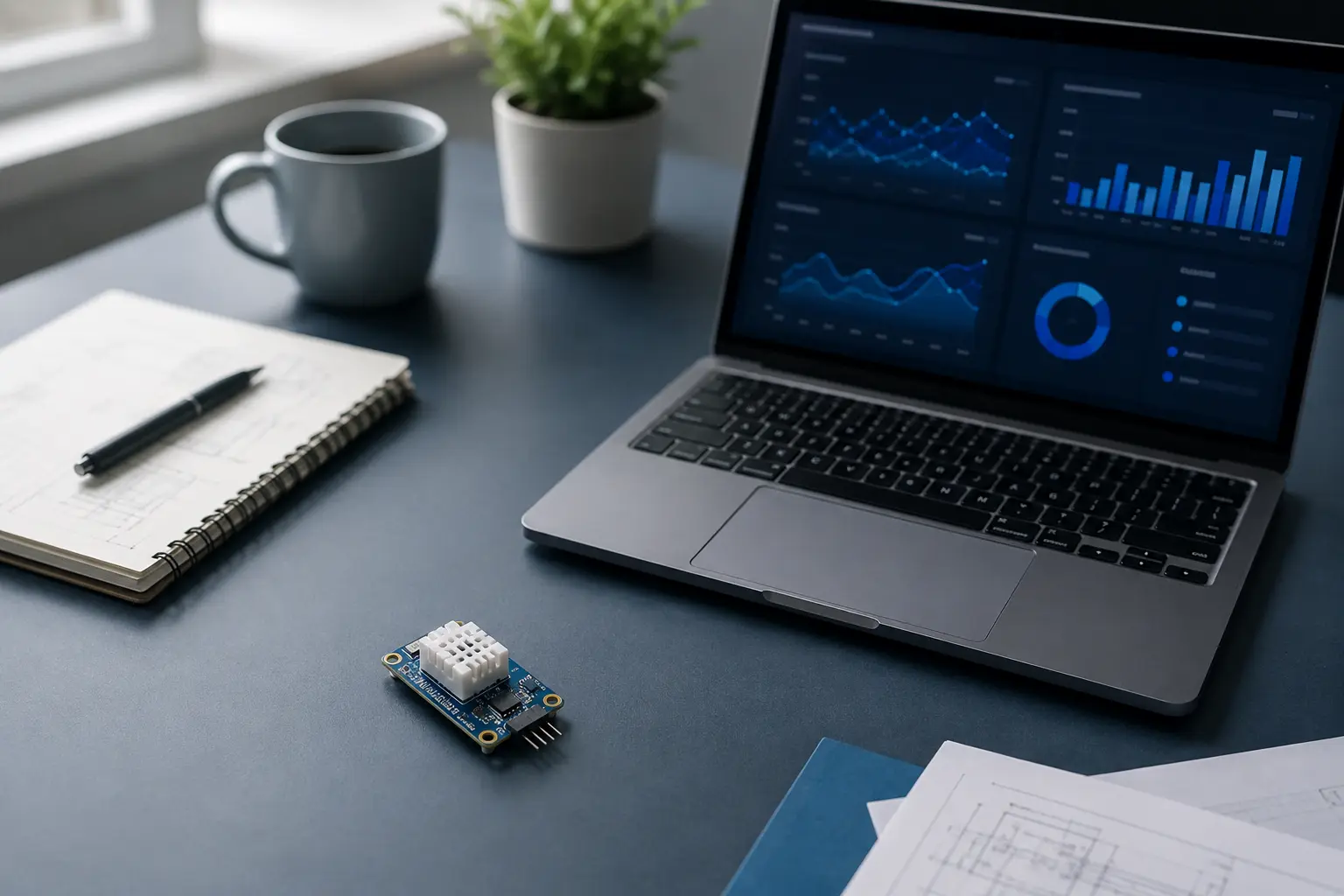
IoT development is the discipline of building physical products that sense, connect, and act on data, combining hardware, firmware, networking, and cloud software into one working system. This guide walks through what that work actually involves, the process teams follow from prototype to production, the tools in active use in 2026, the practices that separate a working product from a stalled pilot, and where the field is genuinely changing right now.
| TL;DR IoT systems are built from three layers: perception (sensors and firmware), network (the protocol moving data), and application (dashboards, device management, APIs). Development typically runs through a staged process: define goals, prototype (EVT), refine for manufacturing (DVT), lock in quality control (PVT), then produce at scale, followed by ongoing OTA updates. Google retired Cloud IoT Core in 2023. AWS IoT Core and Azure IoT Hub are the two dominant managed platforms in 2026. On-device AI inference is moving from pilot to mainstream; fully autonomous agentic devices are still early. |
What does IoT development actually involve?
IoT development is the work of building physical products that collect data from the world, send it somewhere useful, and act on what they learn. It sits at the intersection of several engineering disciplines rather than being one job: embedded programming for the device itself, networking to move data reliably, cloud engineering to store and process it, and security threaded through every layer, because a connected device is also a network entry point.
Nearly all connected products, regardless of industry, follow the same conceptual path. A device senses something, transmits it, and a system on the other end decides what to do with that information, whether that means flagging an anomaly to a technician, adjusting a thermostat automatically, or feeding a live dashboard. The scope of the work is genuinely broad: an IoT developer might spend one week debugging a Bluetooth pairing issue and the next tuning a cloud rules engine that routes device telemetry into a database.
That range is part of why IoT development doesn’t sit neatly under “software development” or “hardware engineering” alone. It draws people from embedded systems, cloud, and increasingly data engineering backgrounds, all working against the same product. The rest of this guide walks through what that process looks like stage by stage, the tools people are actually using in 2026, what tends to break projects, and where the field is genuinely heading.
The three layers every IoT system is built on
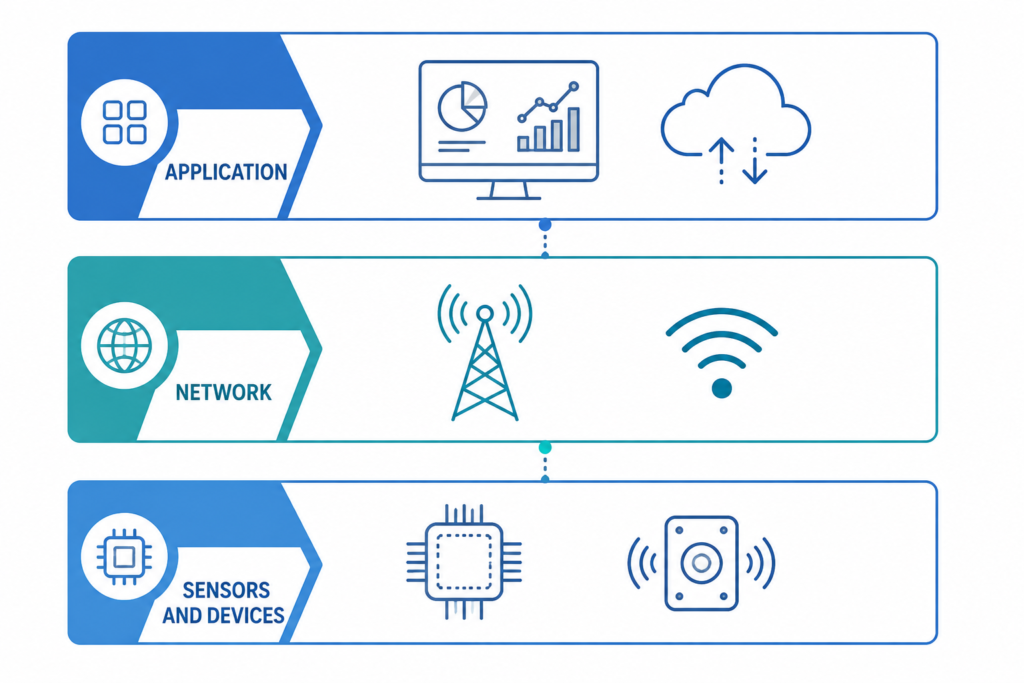
Every IoT system, however complex it looks from the outside, is built from three layers stacked on top of each other.
- Perception layer: sensors, actuators, and the microcontroller or system-on-chip running the device’s firmware. This layer collects raw signals, temperature, motion, location, image data, and converts them into something a network can transmit. Power budget and unit cost bite hardest here, since every added sensor or processing capability draws battery and adds bill-of-materials cost.
- Network layer: moves data from the device to wherever it’s processed. The protocol choice has real downstream consequences. Wi-Fi and cellular offer bandwidth but cost power, Bluetooth Low Energy is efficient but short-range, and LoRaWAN trades bandwidth for long range and low power draw, which is why it shows up so often in agricultural and industrial deployments. Picking a protocol that doesn’t match the deployment environment is one of the most common reasons IoT pilots stall before reaching production.
- Application layer: where raw telemetry becomes something a person or another system can act on, dashboards, alerting rules, device management consoles, and the APIs that let other software query device state. This layer increasingly includes device shadows or digital twins, a persistent record of a device’s last-known and desired state, which lets applications interact with a device without waiting on a live connection.
These three layers constrain each other rather than functioning as independent design choices. A perception layer built around a battery-powered sensor limits what network protocol makes sense, which in turn limits how often the application layer can expect fresh data. Treating all three as one design problem, rather than three separate ones handed off between teams, is what distinguishes IoT architecture from general software architecture.
What businesses actually get out of building IoT products
The business case for IoT development usually comes down to a few consistent categories, even though the specific application varies enormously by industry.
- Operational visibility: sensors on equipment, vehicles, or facilities turn what used to be guesswork, is this machine running normally, into a stream of measurable data. This is the foundation most other IoT use cases are built on.
- Predictive maintenance: once a device reports condition data continuously, patterns that precede failure become visible before the failure happens. Industrial IoT deployments lean on this heavily, since unplanned downtime is expensive relative to the cost of a sensor package.
- New recurring-revenue product lines: connected hardware changes the business model available to a hardware company. A device that reports usage data or requires a cloud subscription to unlock features turns a one-time hardware sale into an ongoing relationship.
- Faster iteration after shipment: a connected device can receive firmware updates over the air, so its behavior isn’t fixed the moment it leaves the factory. Bugs can be patched, and in some cases new features added to hardware already in customers’ hands.
None of this is automatic. Every one of these benefits depends on the underlying system actually working reliably, which is why the process and best practices covered below matter as much as the initial business case.
From prototype to production, stage by stage
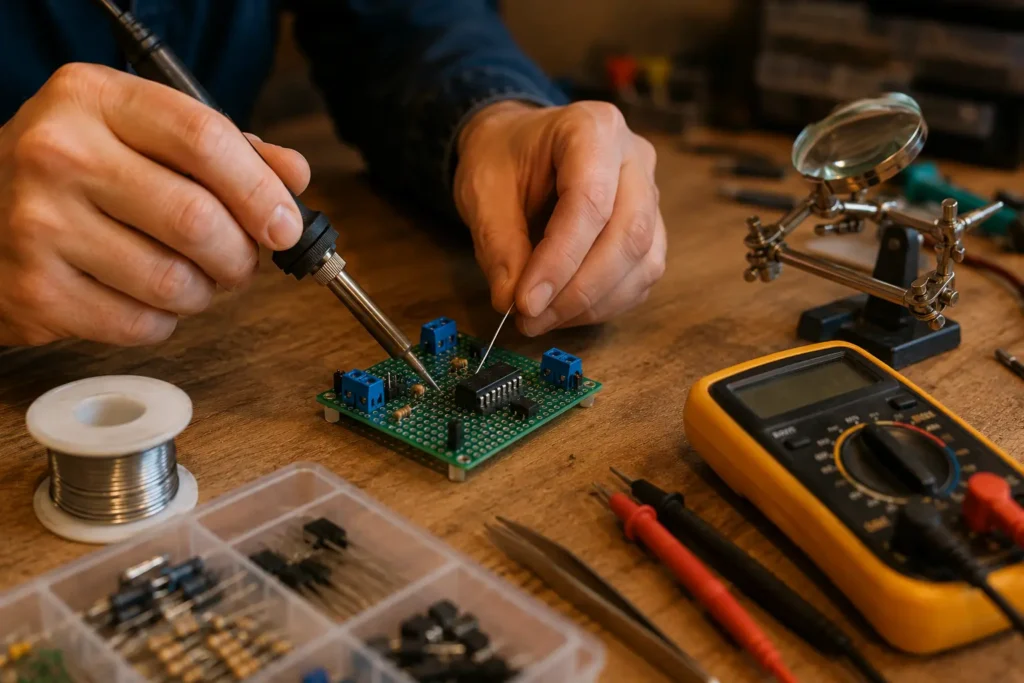
IoT product development typically follows a staged path, whether or not a team formally names the stages. One widely used framework in embedded and connected-hardware development breaks the process into an initial planning stage plus three validation phases.
- Define the goal before touching hardware: the starting point is a clear statement of what the device needs to sense, how often, under what power and connectivity constraints, and what decision the data is meant to support. Skipping this step is a common reason teams end up rebuilding hardware mid-project once real requirements surface.
- Engineering validation testing (EVT): the first working prototype, built to test whether the core design meets its functional specification. The goal isn’t manufacturability or cost yet, it’s proving the concept works: does the sensor read accurately, does the radio hold a connection, does the firmware handle the expected data volume.
- Design validation testing (DVT): once core function is proven, this phase refines the design for manufacturing and field use, durability, thermal behavior, cost reduction, and design-for-manufacturing changes that don’t compromise what EVT proved out.
- Production validation testing (PVT): the final pre-production checkpoint. This phase finalizes the manufacturing process and locks in quality control before committing to volume production, typically via a limited pilot run that catches manufacturing-specific issues hand-built prototypes never surfaced.
- Mass production and the long tail after launch: manufacturing at scale introduces its own monitoring needs, and for IoT specifically, the work doesn’t end at shipment. Because the device stays connected, teams need an over-the-air update strategy and observability tooling in place before the first units reach customers, not after a field issue forces the question.
Not every team runs this exact sequence. This framework is most rigorously followed in hardware-heavy, safety-relevant, or high-volume consumer products, where a manufacturing mistake at scale is expensive. A small team building a software-forward IoT pilot for a single enterprise customer will reasonably move faster and looser through these same questions. Treat the stages as a checklist to work through, not a mandatory gate every project must pass in order.
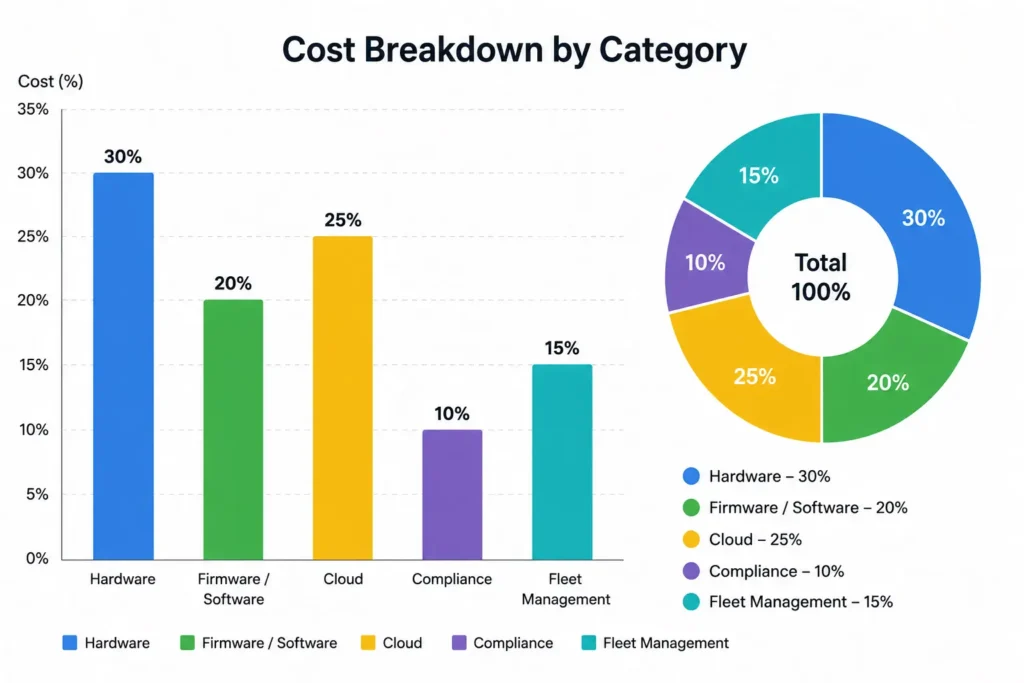
What actually drives IoT development cost
IoT development cost varies enormously by project, and any single number quoted without context, a project can run from tens of thousands of dollars for a simple connected-sensor pilot to seven figures for a certified medical device, is close to meaningless on its own. What’s more useful is understanding what actually drives that cost.
- Hardware bill of materials: every sensor, radio module, and processing component adds unit cost that multiplies across a production run. This is often the most visible cost line but rarely the largest one over a product’s life.
- Firmware and software complexity: building and maintaining the code that runs on the device, plus the cloud services it talks to, is typically the larger and more ongoing cost, especially once a product needs to support OTA updates, device management, and security patching indefinitely.
- Cloud infrastructure: managed IoT platforms charge based on message volume and connected device count, so cloud cost scales directly with fleet size. One 2026 industry analysis estimated that a steady-state fleet of 100,000 devices sending one message per minute could run in the range of $20,000 to $30,000 per month in cloud messaging, storage, and processing at list pricing, though actual figures vary significantly by platform and usage pattern.
- Compliance and certification: regulatory requirements, radio certification, safety standards, or industry-specific compliance like medical or automotive, add both direct cost and schedule time that’s easy to underestimate early on.
- Ongoing fleet management: the cost of an IoT product doesn’t end at launch. Device management, security monitoring, and support at scale are recurring costs that should be budgeted from the start.
The tools IoT developers actually reach for
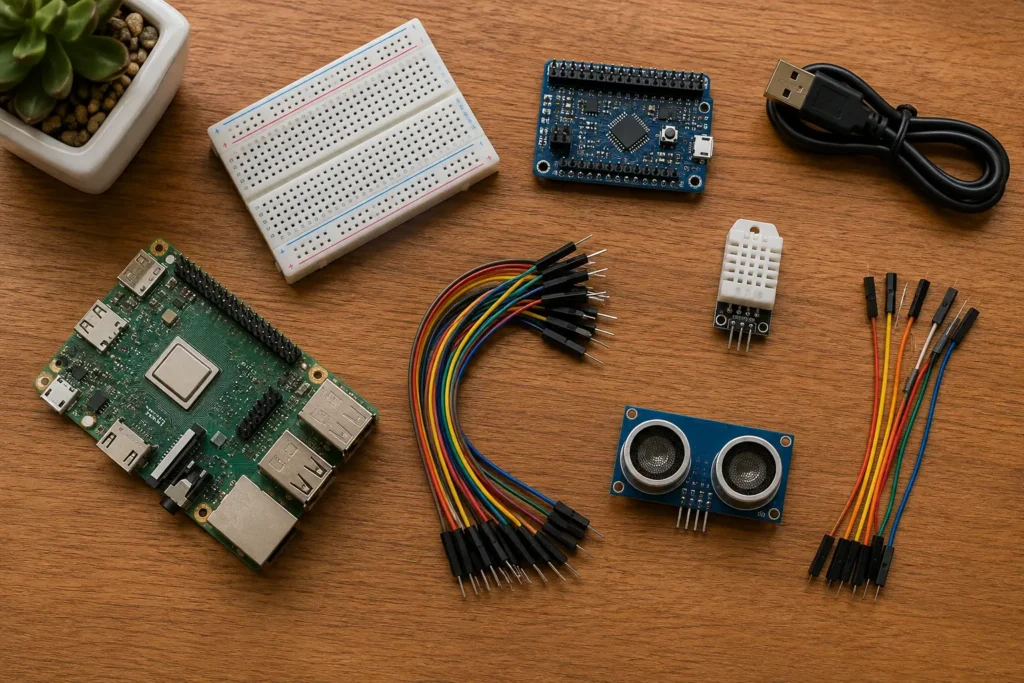
Prototyping hardware: Arduino and Raspberry Pi remain the standard starting point for early-stage prototyping, valued for accessible documentation and a large community rather than being production-grade choices on their own. For teams closer to production, vendor development kits, boards built around a specific microcontroller or wireless chipset, let engineers validate a design against the actual silicon that will ship, rather than a general-purpose dev board.
Cloud IoT platforms: this category is worth double-checking before publishing anything about it, since it changed meaningfully in recent years. Google retired Cloud IoT Core, its managed device-connectivity service, in August 2023, and there is no direct Google replacement; teams building on Google Cloud today typically pair GCP’s general data and analytics services with a third-party device-connectivity partner. That leaves AWS IoT Core and Azure IoT Hub as the two dominant managed IoT platforms as of 2026. AWS IoT Core is generally the broader, more full-featured option and a common default for teams without an existing cloud commitment. Azure IoT Hub tends to be the stronger fit for teams already standardized on Microsoft’s enterprise stack, since it integrates more tightly with tools like Microsoft Defender and Entra ID.
Open-source frameworks: Eclipse IoT remains a widely used open-source community for teams that want to avoid vendor lock-in, offering frameworks for building device firmware, gateways, and cloud-side components without committing to a single commercial platform.
Observability and OTA tooling: once a device ships, monitoring it in the field becomes its own discipline. Dedicated observability platforms built for embedded and IoT products handle firmware crash reporting, fleet-wide health metrics, and staged OTA rollouts, distinct from general-purpose application monitoring tools that aren’t built for constrained, intermittently connected hardware.
What separates a working IoT product from a failed pilot
- Favor iterative development over a rigid upfront plan: because hardware, firmware, and cloud software evolve together, a waterfall approach where every layer is fully specified before building starts tends to produce mismatches between what the hardware can actually do and what the software assumes. An agile approach, particularly through the MVP stage, lets teams correct course before a decision is locked into tooling or a manufacturing run.
- Build security in from the perception layer up: a connected device is a network endpoint, which means it’s a potential entry point regardless of how minor its function seems. Security added after a design is finalized is reliably harder and less complete than security considered from the first architecture decision, covering device authentication, encrypted communication, and a plan for patching vulnerabilities in devices already deployed in the field.
- Plan observability and OTA updates before mass production, not after: teams that treat monitoring and update infrastructure as a post-launch concern typically end up retrofitting it under pressure, during an actual field failure, which is a worse position than having it ready on day one.
- Common pitfall, underestimating the network layer: connectivity issues, not compute or firmware bugs, are among the most frequent reasons IoT pilots stall before reaching production. A protocol that works fine on a bench in an office rarely survives contact with a real deployment environment, whether that’s a warehouse with metal shelving interfering with Wi-Fi or a rural site outside cellular coverage.
- Challenge, device interoperability: real deployments rarely involve a single device type from a single vendor. Getting devices built on different protocols and manufactured by different vendors to work together reliably, sharing a consistent data model and management approach, is a distinct and ongoing challenge that doesn’t fully resolve itself once the initial product ships.
- Challenge, fleet-scale device management: a single prototype behaving correctly on a desk tells a team very little about what happens when ten thousand units are deployed across inconsistent networks, in different physical conditions, running slightly different firmware versions because not every device updates on the same schedule. This is frequently what breaks projects after launch rather than before it, once the complexity of one device becomes the complexity of a fleet.
What’s changing in IoT development right now
A few real shifts are underway in IoT development heading into the back half of 2026, alongside plenty of marketing language that outpaces what’s actually shipping. It’s worth separating the two.
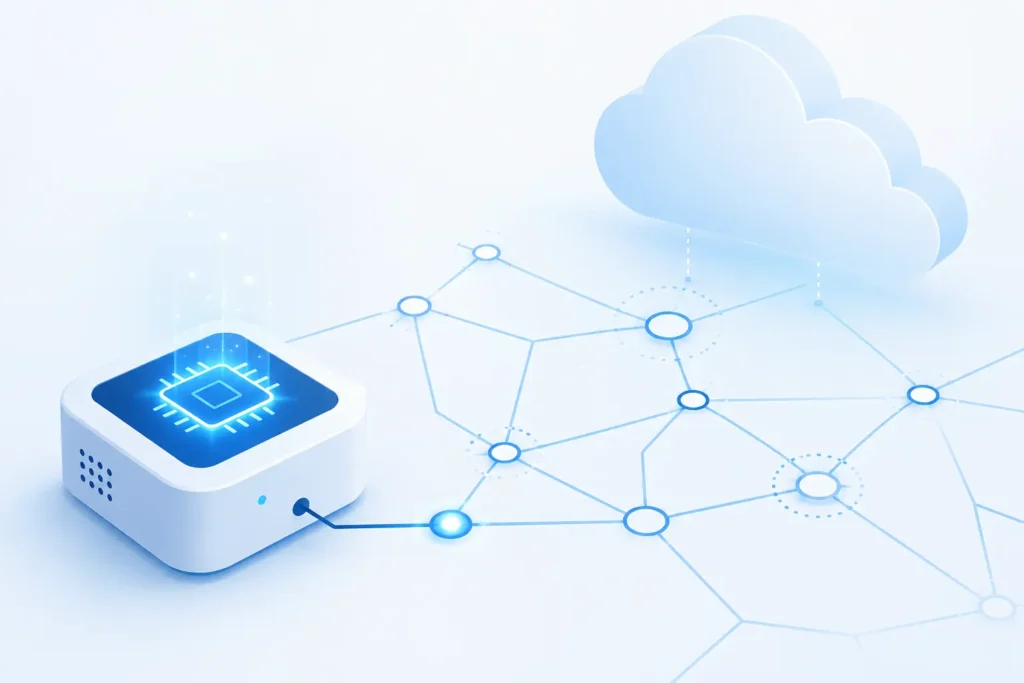
- On-device AI inference is genuinely moving from pilot to mainstream: new IoT system-on-chips increasingly ship with dedicated neural processing units capable of running small models directly on the device, for tasks like anomaly detection, basic computer vision, and local audio processing, without a round trip to the cloud. This is backed by real hardware progress, chipmakers have made low-power AI silicon efficient and cheap enough to fit into everyday sensors and monitors, not just high-end devices. The motivation is straightforward: lower latency, better resilience when connectivity drops, and reduced bandwidth and cloud costs.
- Agentic behavior at the edge is real but early: a newer pattern is emerging where edge systems don’t just classify data or flag anomalies, but reason across multiple inputs and take action autonomously rather than waiting for a person or a cloud service to decide. This is worth pairing with a caution: broader AI agent deployments across the industry faced a wave of disappointing results and overpromised demos through 2026, and edge-specific agentic systems are an earlier-stage version of that same technology, not yet a mature, widely deployed pattern.
- Edge and cloud are converging, not replacing each other: the architecture emerging in practice isn’t edge-only or cloud-only, it’s a hybrid where immediate decisions happen locally and the cloud continues handling longer-term analytics, model training, and coordination across a fleet.
What this looks like in practice
To make the process concrete, consider a composite example built from a common industrial pattern rather than one named deployment, illustrative, not a verified case study.
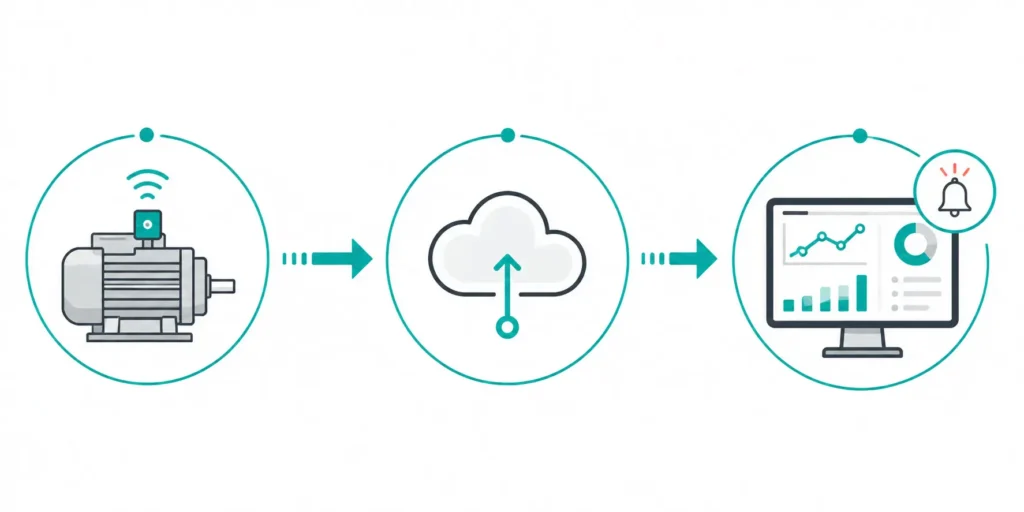
A manufacturing team wants earlier warning before a class of motors fails on the line, since each unplanned stop costs hours of lost production. The perception layer is a small vibration and temperature sensor retrofitted onto each motor, chosen specifically because it doesn’t require rewiring the existing equipment. The network layer uses a low-power wireless protocol suited to a factory floor with significant metal interference, prioritizing reliability over raw bandwidth since the data volume per motor is small. The application layer aggregates readings from every motor into a dashboard, with an alerting rule trained on the vibration signature that historically precedes bearing failure.
The team runs EVT on five motors to confirm the sensor readings are stable and the alert logic doesn’t produce excessive false positives, then moves to a DVT phase to harden the sensor housing for heat and dust before a wider rollout. The unglamorous parts of the project, agreeing on false-positive tolerance with the maintenance team, and building an OTA path so the alert threshold can be tuned after deployment without a truck roll, end up mattering as much as the initial sensor selection.
This pattern, instrumenting equipment condition to catch failure before it happens, is one of the most common and well-documented applications of industrial IoT, and is well established across manufacturing, chemical processing, and energy sectors according to industry practitioner reporting.
Frequently asked questions
What is IoT development in simple terms?
It’s the work of building a physical product that can sense data from its environment, send that data somewhere, and act on it, combining hardware, firmware, networking, and cloud software into one system.
What skills do you need to become an IoT developer?
A working foundation in embedded programming (commonly C or C++), networking protocols, and at least one cloud platform. Many IoT developers come from an embedded systems, software, or data engineering background and pick up the adjacent skills on the job, since the field draws from all three.
What is the IoT development life cycle?
Most teams move through goal definition, an early prototype (engineering validation testing), design refinement for manufacturing (design validation testing), a pre-production checkpoint (production validation testing), and mass production, followed by ongoing monitoring and over-the-air updates. Smaller or software-heavy projects often compress or skip stages.
What tools do IoT developers use most?
Arduino and Raspberry Pi for early prototyping, vendor development kits for production-track hardware, AWS IoT Core or Azure IoT Hub for managed cloud connectivity, and dedicated observability tools for monitoring devices once they’re in the field.
How much does it cost to build an IoT product?
It depends heavily on hardware complexity, certification requirements, and fleet size, ranging from tens of thousands of dollars for a simple pilot to seven figures for a certified, regulated product. Cloud cost alone scales directly with the number of connected devices and message volume.
Is IoT development the same as embedded systems development?
They overlap but aren’t identical. Embedded systems development focuses on the device itself, firmware and hardware. IoT development includes that plus the networking and cloud layers that let the device connect, report data, and be managed remotely.
Sources consulted
Google Cloud IoT Core retirement (August 2023): reported by multiple industry sources including IoT Analytics and independent platform-comparison analyses.
Edge AI and on-device inference trends: Mender.io, EICTA Consortium, and iottechnews.com 2026 coverage.
IoT device growth figures: IoT Analytics connected-device forecasts.
Cloud IoT platform cost illustration: Digilogic Infocom 2026 platform comparison.
Industrial predictive maintenance context: IIoT World practitioner reporting, 2025-2026.