
Search for the phrase and you’ll find a crowded field of thin, near-identical explainers — pages that repeat the same handful of buzzwords (AutoML, edge AI, MLOps) without ever getting specific about what’s actually changed, for whom, or why it matters this year rather than last year. That’s the gap worth naming upfront: a lot of what’s published under this keyword reads like it was generated to rank rather than to inform.
What Droven.io is positioned to do differently is treat “machine learning trends” as a moving target that needs updating, sourcing, and context — not a static glossary. The platform’s machine learning section sits inside a broader five-pillar structure covering AI, machine learning, cybersecurity, cloud computing, and the future of work, and it’s built around a simple premise: explain what’s changing in ML without assuming an engineering background, and without selling a product on the way there. For the full picture of the platform itself — what it is, how it works, and who it’s built for — see our complete guide to what Droven io is.
One honest caveat, in the interest of full transparency: independently verifiable public detail about Droven.io itself — who runs it, how long it’s operated, its exact traffic and readership — is limited. That’s true of most editorial tech-explainer sites at this scale, and it’s worth stating plainly rather than glossing over.
Why machine learning trend coverage matters in 2026
Machine learning stopped being an experimental side project for most organizations years ago. The harder, more current question isn’t “should we use ML” — it’s which of the following actually change how a team ships, monitors, and governs models this year:
- Which tools reduce the need for a dedicated data science team
- Where models should run — cloud, edge, or a hybrid of both
- How teams keep a model accurate after it’s already in production
- What “responsible AI” requires in practice, not just in a slide deck
- How agentic systems change the shape of automation itself
This is where trend coverage earns its keep: it’s less about defining machine learning from scratch and more about triaging which shifts deserve a business’s attention this quarter.

The core ML trends Droven.io tracks
AutoML — lowering the barrier to entry
Automated machine learning tools let teams without dedicated data scientists build, tune, and deploy models with far less manual work. The trend coverage here typically focuses on where AutoML genuinely replaces specialist work and where it still needs a human checking the output — a distinction thinner competitor content tends to skip.
Edge AI and on-device ML
As inference moves closer to where data is generated — phones, sensors, industrial equipment — latency drops and privacy improves, but so does the complexity of keeping models updated across thousands of devices. Coverage in this area matters most to teams building products where a round trip to the cloud is too slow or too risky.
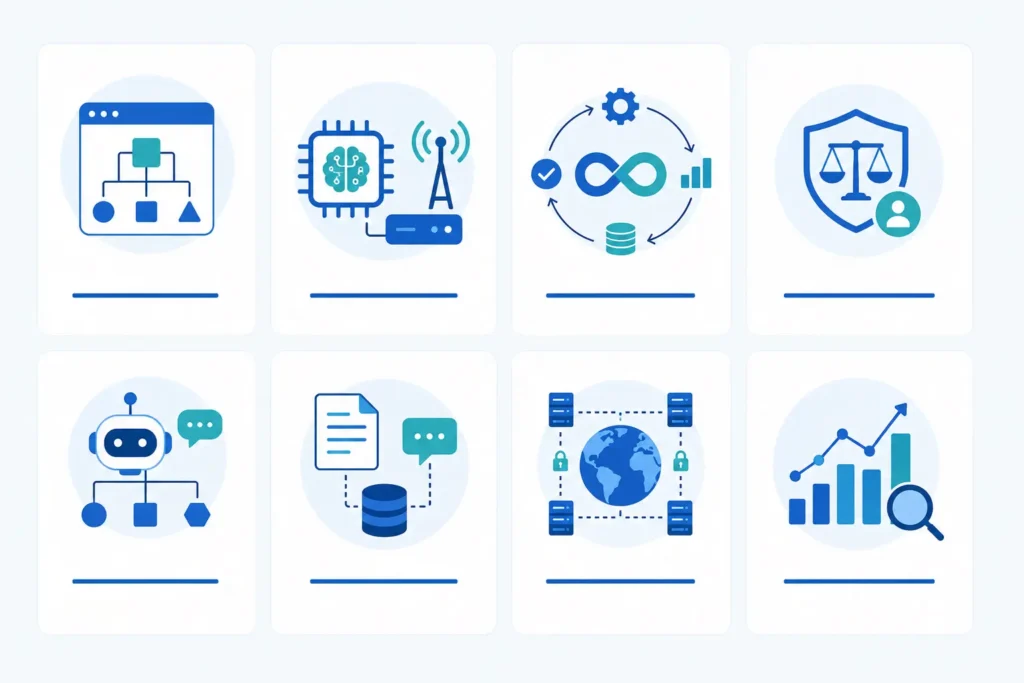
MLOps — the unglamorous trend that matters most
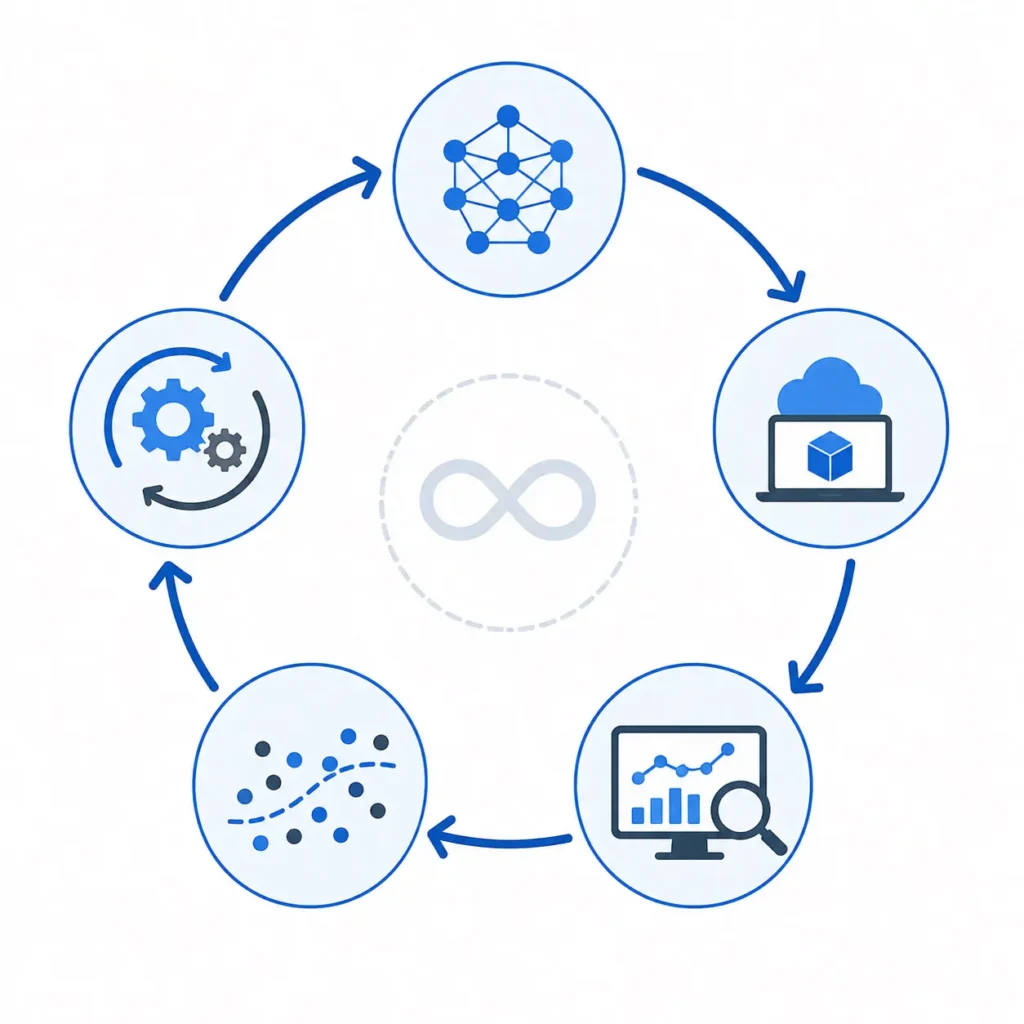
Building a model was never really the hard part; keeping it accurate, monitored, and reproducible in production is. MLOps — versioning, automated retraining, drift detection, rollback plans — is the trend most likely to determine whether an organization’s ML investment actually pays off, which is exactly why it deserves more attention than it usually gets in surface-level trend lists.
Responsible and explainable AI
As ML systems influence hiring, lending, healthcare triage, and other high-stakes decisions, the ability to explain why a model produced a given output has moved from “nice to have” to a compliance and trust requirement in several sectors. Good trend coverage ties this back to concrete frameworks rather than treating “responsible AI” as a slogan.
Agentic workflows and RAG
Two of the more recent shifts: agentic systems that chain multiple ML-driven decisions together with less human intervention at each step, and retrieval-augmented generation, which grounds a model’s output in an organization’s own data rather than relying purely on what it learned during training. Both change what “deploying a model” even means.
Federated learning and predictive analytics
Federated learning lets models train across decentralized data without that data ever leaving its source — relevant anywhere privacy regulation makes centralizing data risky. Predictive analytics, meanwhile, remains the most mature and widely adopted application of ML in day-to-day business decisions, from fraud detection to demand forecasting.
Who actually uses this kind of coverage
| Reader type | What they’re looking for |
|---|---|
| Business owners & decision-makers | A vendor-neutral read on which ML trends justify budget, before talking to a vendor |
| Developers & engineers | Context on tooling shifts (MLOps, AutoML) without a sales pitch attached |
| Marketers & content professionals | How ML and AI trends intersect with search, personalization, and automation |
| Students & early-career learners | Plain-language grounding before diving into formal coursework |
| IT & security teams | How ML pipelines introduce new attack surface and governance requirements — see Droven.io’s cybersecurity updates coverage for the security-specific angle |
Pros and cons of relying on Droven.io for ML trends
Strengths:
- Free access with no registration wall
- Vendor-neutral — no affiliate links or sponsored rankings distorting which trends get emphasized
- Written for non-specialists without oversimplifying the underlying mechanics
- Covers the less flashy but more consequential trend (MLOps) as seriously as the attention-grabbing ones (agentic AI)
Limitations, stated plainly:
- No interactive tools, sandboxes, or hands-on labs — this is reading material, not a training environment
- No certifications — it’s a supplement to formal learning, not a replacement for one
- No community or peer discussion features
- As with most independent editorial platforms at this scale, third-party verification of authorship and operational history is limited

Droven.io vs. other machine learning trend sources
| Droven.io | Vendor blogs (AWS, Google Cloud, etc.) | Analyst reports (Gartner, Forrester) | Academic/research sources (arXiv, The Batch) | |
|---|---|---|---|---|
| Free access | Yes | Yes | Usually paywalled | Yes |
| Vendor-neutral | Yes | No — promotes own products | Mostly, though vendor-funded briefings exist | Yes |
| Beginner-friendly | Yes | Varies | No — written for enterprise buyers | No — written for practitioners |
| Business-trend framing | Yes | Partial | Yes | Rarely |
| Depth on emerging research | Limited | Limited | Limited | High |
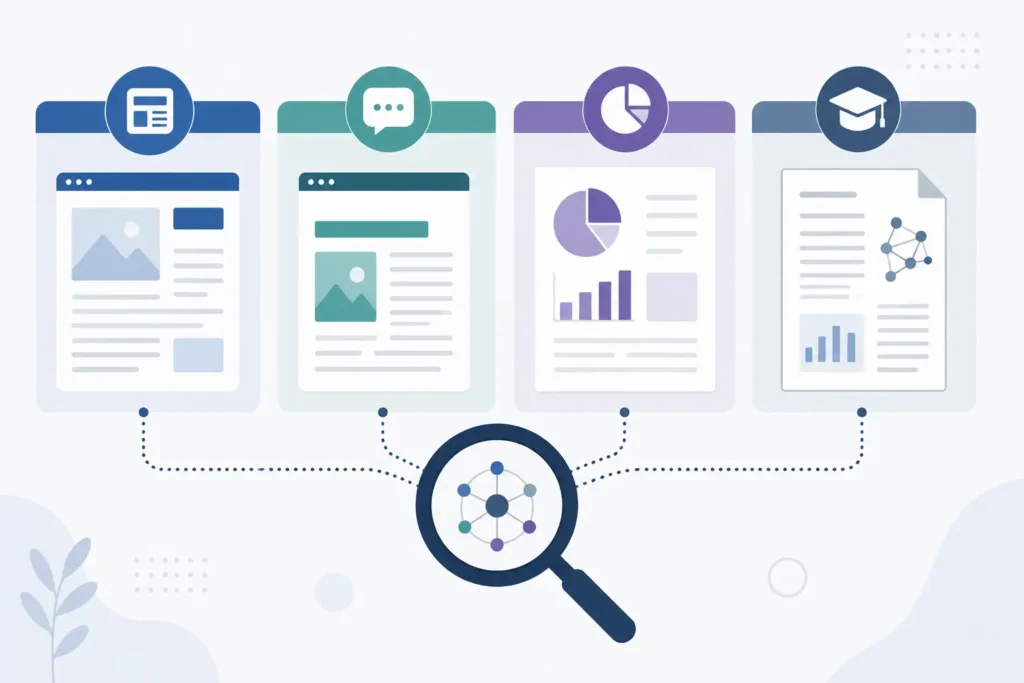
The realistic positioning: Droven.io’s ML trend coverage works best as a first, plain-language pass at what’s shifting — a starting point before reading a vendor’s technical documentation, an analyst report, or a primary research paper, not a replacement for any of them.
My take on the coverage
Judged against the rest of what currently ranks for this exact keyword, the bar is low — most of the competing content repeats the same trend list (AutoML, edge AI, MLOps, responsible AI) without ever getting more specific than a dictionary definition, and several pages read as though they were produced with minimal editorial oversight. Content that actually distinguishes which of those trends changes near-term business decisions, and which are still mostly research-stage, would be a meaningful step up from what’s currently available. Whether Droven.io’s coverage consistently clears that bar is worth checking article by article — trend content ages fast, and the value is entirely in how current and specific each individual piece stays, not in the topic list itself.
Bottom line
Machine learning trend coverage is only useful if it changes what a reader does next — which tool to evaluate, which risk to flag, which skill to prioritize. Droven.io’s ML section is built around that premise and covers the trends that currently matter (AutoML, edge AI, MLOps, responsible AI, agentic workflows) without a sales pitch attached. Treat it as a clear first pass on the landscape, and pair it with deeper technical or analyst sources before making a significant ML investment decision.
Frequently asked questions
What does “droven.io machine learning trends” refer to? It’s the machine learning coverage area of Droven.io, a free technology and AI knowledge platform, focused on explaining current shifts in ML tooling and adoption.
Is Droven.io free to use? Yes — reading the content requires no account or payment.
Does Droven.io build or sell machine learning tools? No. It’s positioned as an editorial explainer platform, not a software vendor or tool marketplace.
What machine learning trends does it focus on for 2026? AutoML, edge AI, MLOps, responsible/explainable AI, agentic workflows, RAG, federated learning, and predictive analytics are the recurring themes.
Is this a good source for enterprise AI strategy decisions? It’s a reasonable starting point for non-specialists getting oriented, but enterprise decisions typically warrant deeper analyst or vendor-specific research alongside it.
How is this different from a vendor’s ML blog? Vendor blogs typically promote that vendor’s own tools; Droven.io’s stated position is vendor-neutral explanatory content.
Does it offer hands-on ML tutorials or certifications? No — it’s reading-based content, not an interactive learning platform.
Who should look elsewhere for ML trend information? Practitioners needing primary research depth, or teams needing certified training, will need to supplement with academic sources or formal courses.
Related reading: for the full platform breakdown, see what Droven.io is; for how the same editorial approach holds up on security topics, see our review of Droven.io’s cybersecurity updates.


